Maximize time on treatment by starting early3,29,38
Learn more about efficacy and ongoing studies.

Endochondral bone growth, in which cartilage is replaced by bone at open growth plates, requires a balance of cell signals—CNP (which promotes bone growth) and FGFR3 (which slows bone growth).1,3
Overactive FGFR3 signaling relative to CNP signaling in growth plate cells is the underlying cause of inhibited bone growth in achondroplasia. Endogenous CNP levels cannot adequately regulate overactive FGFR3 signals.1
Learn more about inhibited bone growth and the impact of timely care in achondroplasia.1,2
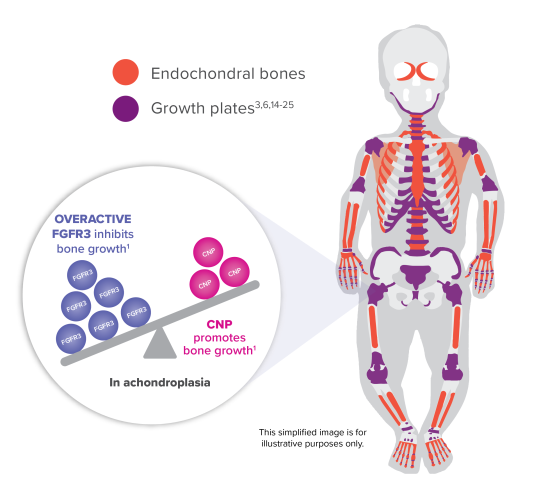
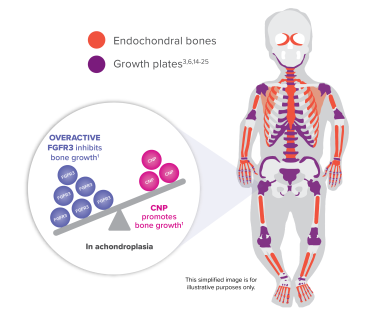
CNP, C-type natriuretic peptide; FGFR3, fibroblast growth factor receptor 3.
Many complications are more common in the first 2 years of life.2,26-28
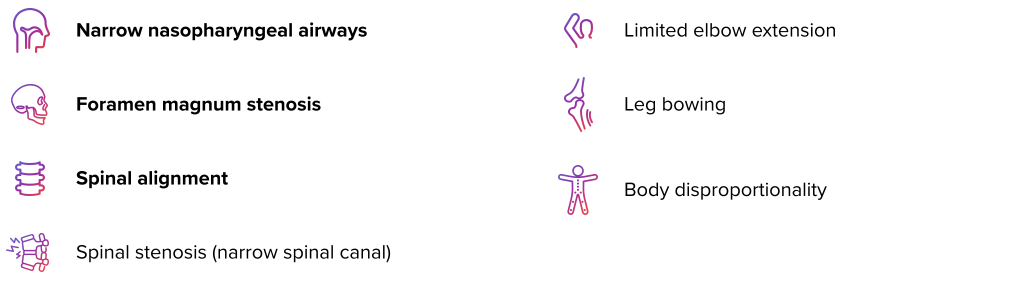
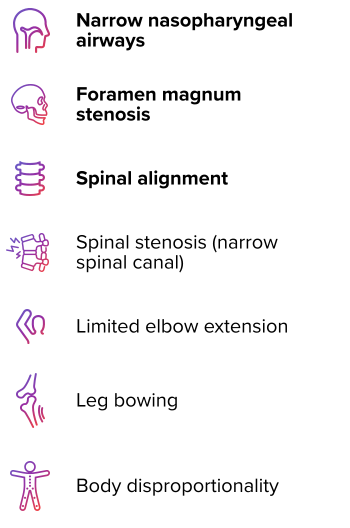
VOXZOGO has been approved to increase linear growth in children with achondroplasia and open growth plates.29 Proactive and multidisciplinary care can help inform management and treatment approaches, which are important for multisystemic complications.2,30
Disproportionate growth (differences in body proportions) is a characteristic feature of achondroplasia associated with reduced mobility, pain, and dependence on devices and caregiver assistance.27,31
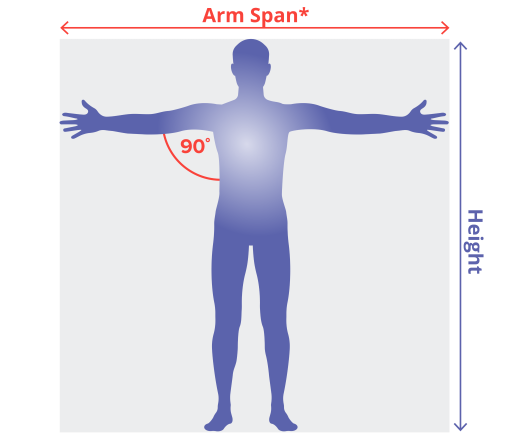
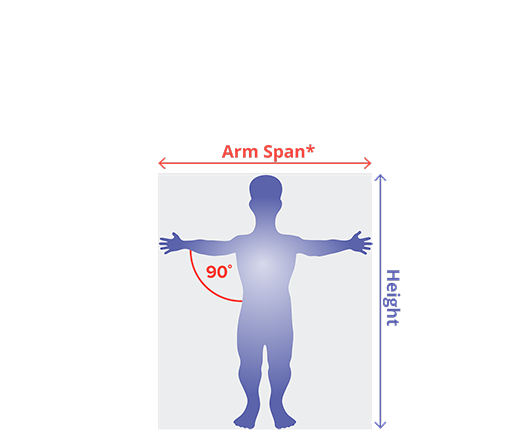
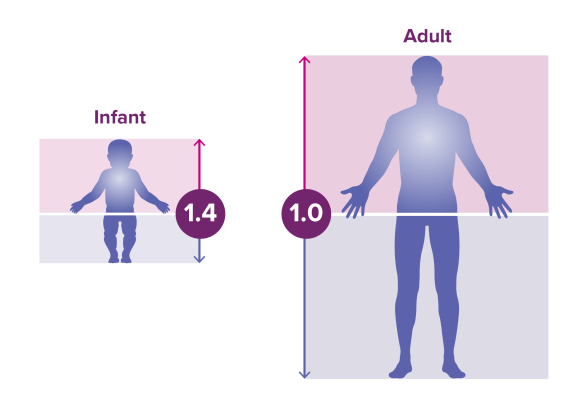
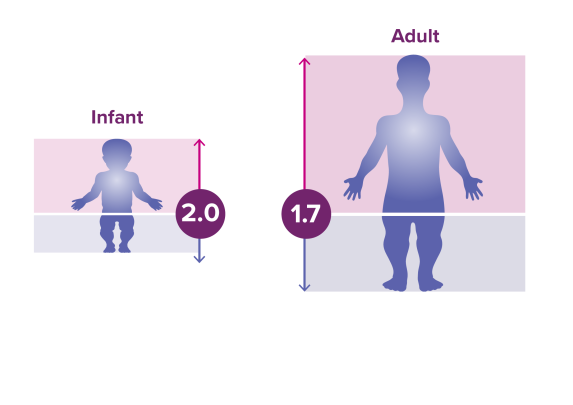
Achondroplasia affects how body proportions change over time, which is commonly measured by arm span, arm span-to-height ratio, and upper-to-lower body segment ratio.31-34
Arm span-to-height ratio: Arm span divided by standing height34
Upper-to-lower body segment ratio: Length of the upper body divided by the length of the lower body.34
*Length between tips of the left and right middle fingers when standing against a flat wall with arms outstretched, creating a 90-degree angle with the torso.34
†Ratios represent the 50th percentile of children with achondroplasia.32,33
Spinal stenosis (narrowing of the spinal canal that compresses the spinal cord/nerve roots) in the lumbar spine is often symptomatic in adulthood, associated with chronic pain, walking intolerance, bowel/bladder dysfunction, and paraplegia.26,35,36
However, its development can begin much earlier in children with achondroplasia, given that their spinal canal reaches ~95% of adult size before 5 years old.35,36
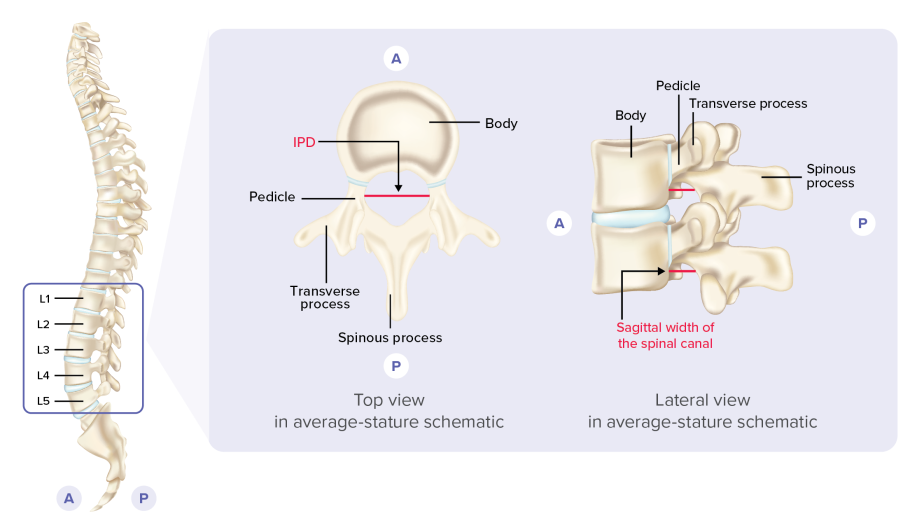
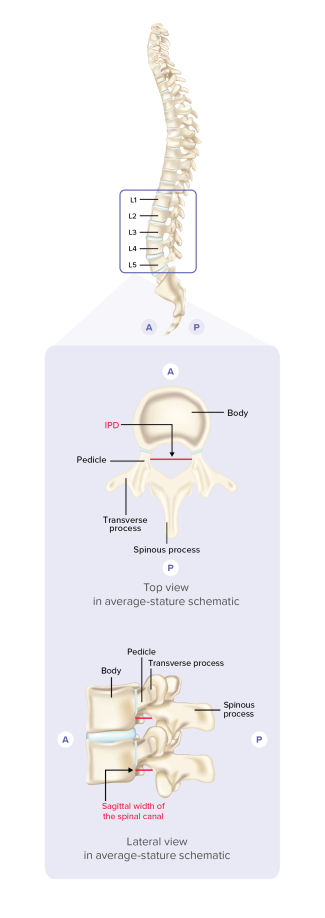
A, anterior (front); L1-5, lumbar vertebra 1-5; P, posterior (back).
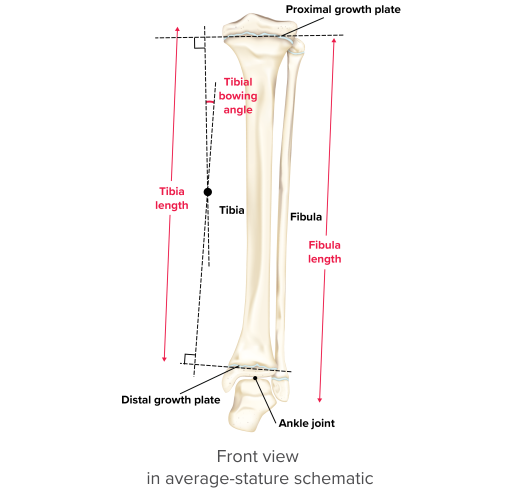
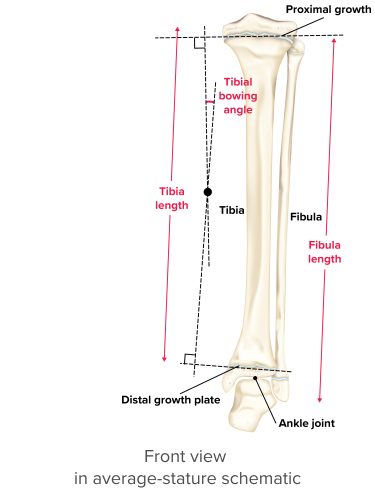
In achondroplasia, leg bowing is associated with knee joint instability and skeletal irregularities of the lower leg, including tibial bowing and fibula overgrowth.37
Lower leg bone morphology X-ray measures37:
Learn more about efficacy and ongoing studies.
Warnings and Precautions for Risk of Low Blood Pressure
Transient decreases in blood pressure were observed in clinical studies. Patients with significant cardiac or vascular disease and patients on anti-hypertensive medicinal products were excluded from participation in VOXZOGO clinical trials. To reduce the risk of a decrease in blood pressure and associated symptoms (dizziness, fatigue, and/or nausea), patients should be well hydrated, have adequate food intake, and drink approximately 8-10 ounces of fluid in the hour prior to VOXZOGO administration.
In a 52-week, randomized, double-blind, placebo-controlled trial in 121 subjects with achondroplasia, subjects aged from 5.1 to 14.9 years, (Study 1) eight (13%) of 60 patients treated with VOXZOGO had a total of 11 events of transient decrease in blood pressure, compared to 3 (5%) of 61 patients on placebo, over a 52-week treatment period. The median time to onset from injection was 31 (18 to 120) minutes, with resolution within 31 (5 to 90) minutes in VOXZOGO-treated subjects. Two out of 60 (3%) VOXZOGO-treated patients each had one symptomatic episode of decreased blood pressure with vomiting and/or dizziness compared to 0 of 61 (0%) patients on placebo.
Adverse Reactions:
Adverse reactions that occurred in ≥5% of patients treated with VOXZOGO and at a rate greater than that of placebo in the phase 3 study are injection site reactions (including erythema, swelling, urticaria, pain, bruising, pruritus, hemorrhage, discoloration, and induration), vomiting, arthralgia, decrease in blood pressure, gastroenteritis, diarrhea, dizziness, ear pain, influenza, fatigue, seasonal allergy, and dry skin. VOXZOGO-treated patients had an increase in alkaline phosphatase levels (17%), and was noted as a laboratory abnormality.
Injection site reactions: In Study 1, injection site reactions occurred in 51 (85%) subjects receiving VOXZOGO and 50 (82%) subjects receiving placebo over a 52-week period of treatment. Patients receiving VOXZOGO experienced a total of 6983 events of injection site reactions, while patients receiving placebo experienced a total of 1776 events of injection site reactions, over a 52-week period, representing 120.4 events per patient/year exposure and 29.2 events per patient/year exposure, respectively. Two patients in the VOXZOGO arm discontinued treatment due to adverse events of pain and anxiety with injections.
Pediatric Patients 0 to <5 Years:
The safety of VOXZOGO in pediatric patients 0 to <5 years with achondroplasia was evaluated in a 52-week randomized, double-blind, placebo-controlled study (Study 2). In this study, 64 patients from birth to <5 years of age were randomized to receive either a daily vosoritide dose with similar exposure to that characterized to be safe and effective in children with ACH aged ≥5 years old, or placebo. An additional 11 patients received open-label treatment as part of this study. The most common adverse reactions (>10%) reported in pediatric patients 0 to <5 years were injection site reactions (86%) and rash (28%). The overall safety profile of VOXZOGO in pediatric patients 0 to <5 years was similar to that seen in older pediatric patients.
Administration and Monitoring:
VOXZOGO is administered as a daily subcutaneous injection. Prior to use, instruct caregivers on proper preparation and administration of VOXZOGO, and ensure caregivers have demonstrated the ability to perform a subcutaneous injection.
Monitor and assess patient body weight, growth, and physical development regularly every 3-6 months. Adjust dosage according to the patient’s actual body weight. Permanently discontinue treatment with VOXZOGO upon confirmation of no further growth potential, indicated by closure of epiphyses.
Special Populations:
You may report side effects to the FDA at 1-800-FDA-1088 or www.fda.gov/medwatch. You may also report side effects to BioMarin at 1-866-906-6100.
Please see additional safety information in the full Prescribing Information.
VOXZOGO® (vosoritide) is indicated to increase linear growth in pediatric patients with achondroplasia and open growth plates.