“I’m glad I was able to stay on VOXZOGO as long as I did.”
– Vivan, 18 years old and completed treatment with VOXZOGO

VOXZOGO is approved under accelerated approval based on an improvement in annualized growth velocity. Continued approval for this indication may be contingent upon verification and description of clinical benefit in confirmatory trial(s).1
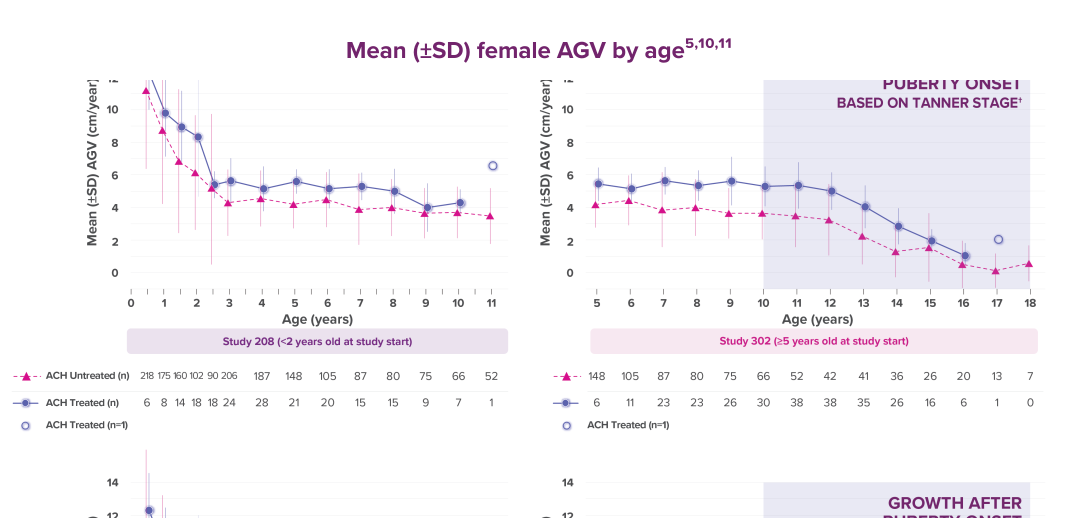
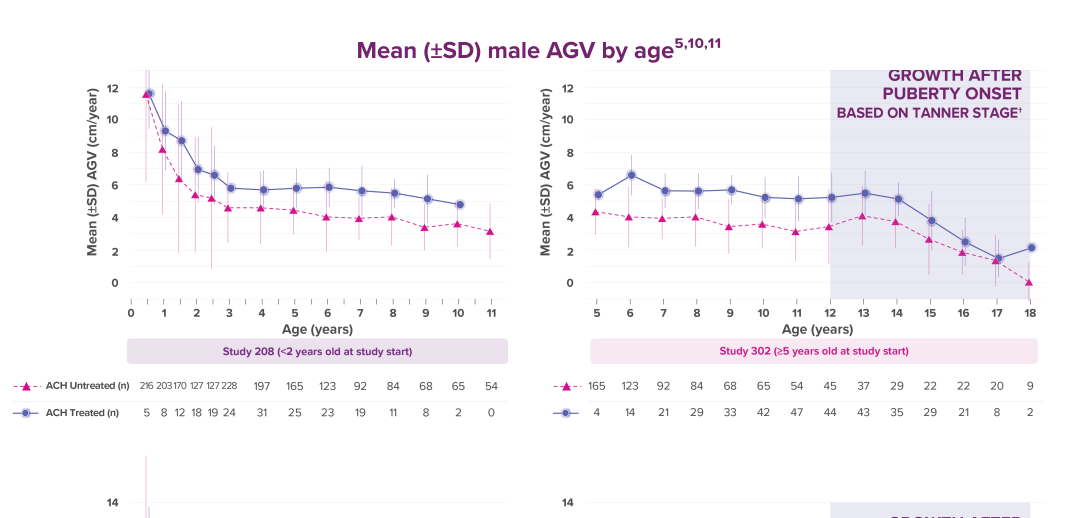
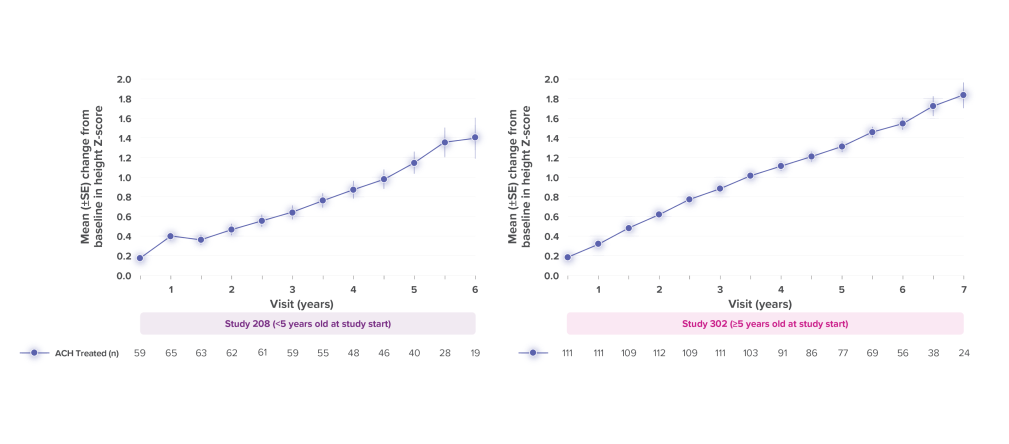
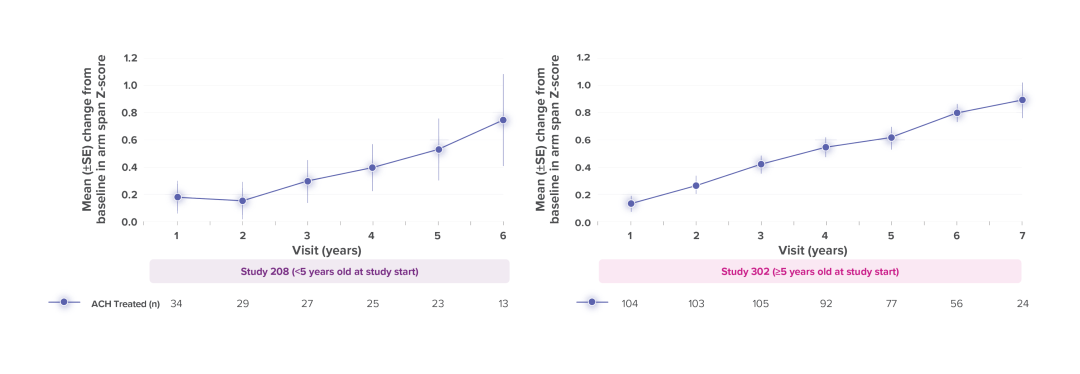
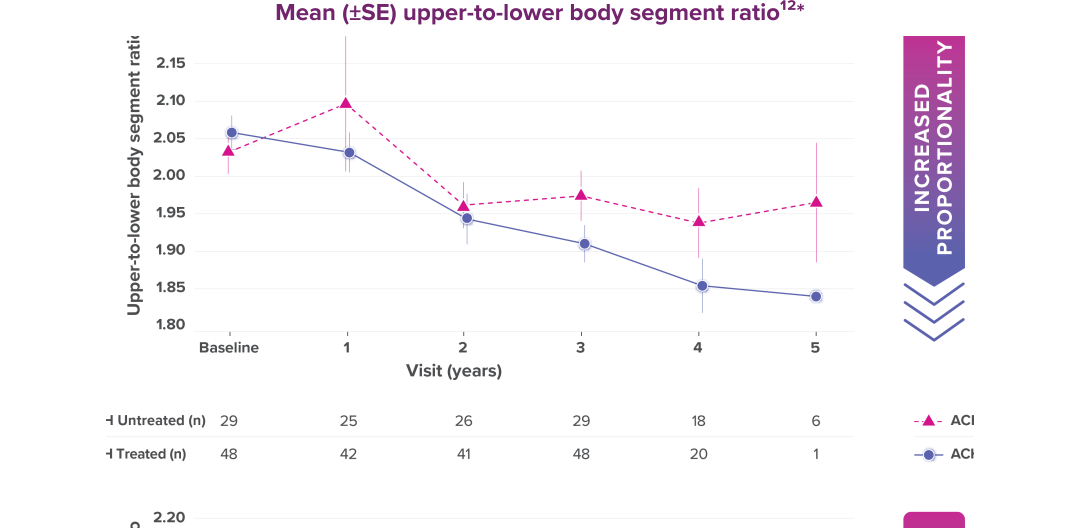
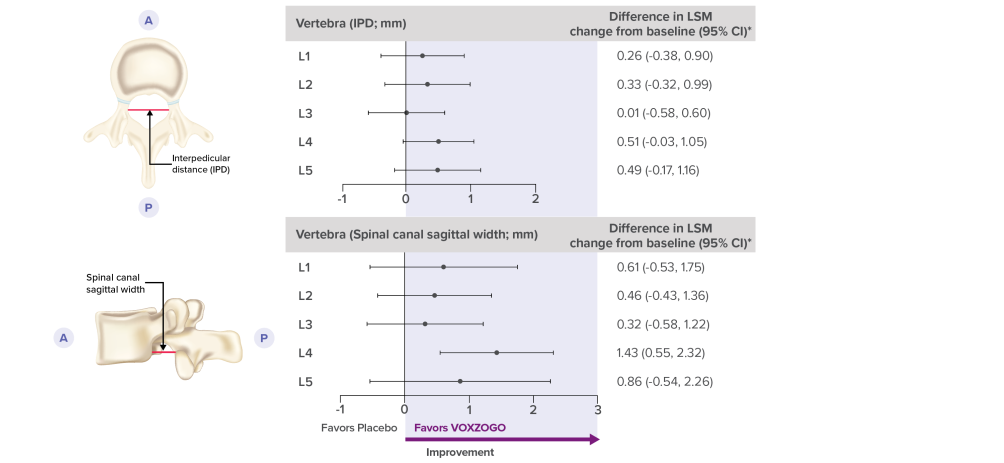
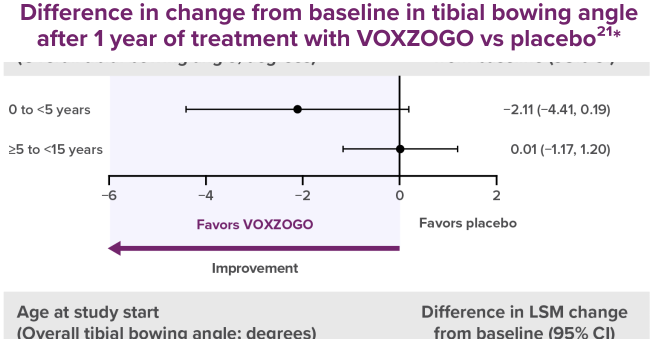
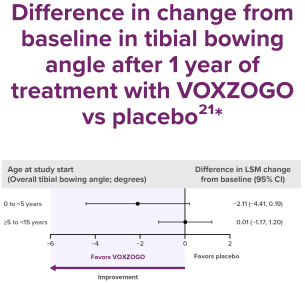
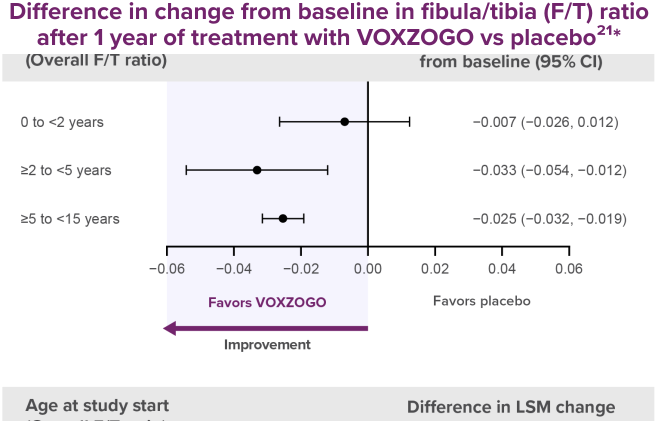
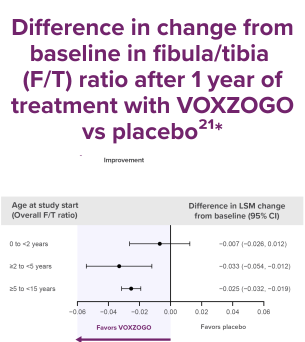
The following information is provided to inform healthcare providers on the ongoing assessment and experience of patients in the clinical trial program.
These data are not included in the US Prescribing Information and do not establish a clinical benefit or conclusions on efficacy. The analyses are preliminary and exploratory and should be interpreted cautiously.

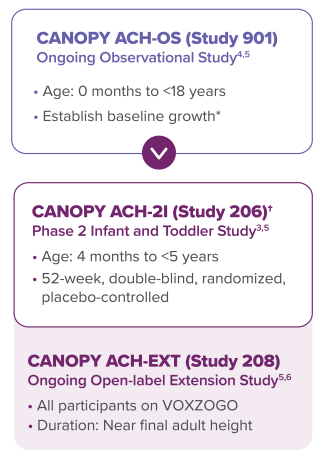
ACH, achondroplasia; AGV, annualized growth velocity; CDC, Centers for Disease Control and Prevention; CI, confidence interval; EXT, extension; LSM, least squares mean; OS, observational study.
*Duration of ≥6 months if aged ≥3 months at study entry; duration of ≥3 months if aged <3 months at study entry.4
†Average-stature referenced height Z-scores converted from standing height using age- and sex-matched CDC reference data for average-stature children; if <24 months at baseline, body length took precedence over standing height.3,8
‡Difference in LSM change from baseline: VOXZOGO – placebo. LSM (95% CI) and LSM differences estimated from ANCOVA (analysis of covariance) model, including treatment arm, sex, randomization age strata, and baseline age, height Z-score, and AGV.3,8
VOXZOGO is approved under accelerated approval based on an improvement in annualized growth velocity. Continued approval for this indication may be contingent upon verification and description of clinical benefit in confirmatory trial(s).1
As clinical trials are ongoing, the impact on final adult height has not been established and continues to be evaluated along with other pre-specified outcome measures.2,6,7,17,19
![CANOPY ACH-2I (Study 206)/CANOPY ACH-EXT (Study 208) Secondary outcome measures include: [body proportionality,] functional and health-related quality of life measures, spinal alignment, and skull morphology](https://hcp.biomarin.com/en-us/voxzogo/wp-content/uploads/sites/4/2026/08/Clinical_trial_table_Desktop.svg)
![CANOPY ACH-2I (Study 206)/CANOPY ACH-EXT (Study 208) Secondary outcome measures include: [body proportionality,] functional and health-related quality of life measures, spinal alignment, and skull morphology](https://hcp.biomarin.com/en-us/voxzogo/wp-content/uploads/sites/4/2026/08/Clinical_trial_table_Mobile.svg)
ACH, achondroplasia; EXT, extension; HRQOL, health-related quality of life; ITQOL, Infant Toddler Quality of Life; QoLISSY, Quality of Life in Short Stature Youth; ULBR, upper-to-lower body segment ratio; WeeFIM-II, Pediatric Functional Independence Measure, 2nd version.
*Visit clinicaltrials.gov for the complete list of the trials’ secondary outcome measures (NCT03197766, NCT03424018, NCT03583697, NCT03989947).6,7,17,19
– Vivan, 18 years old and completed treatment with VOXZOGO
VOXZOGO has been carefully evaluated in infants and children with achondroplasia.1,12,22
Warnings and Precautions for Risk of Low Blood Pressure
Transient decreases in blood pressure were observed in clinical studies. Patients with significant cardiac or vascular disease and patients on anti-hypertensive medicinal products were excluded from participation in VOXZOGO clinical trials. To reduce the risk of a decrease in blood pressure and associated symptoms (dizziness, fatigue, and/or nausea), patients should be well hydrated, have adequate food intake, and drink approximately 8-10 ounces of fluid in the hour prior to VOXZOGO administration.
In a 52-week, randomized, double-blind, placebo-controlled trial in 121 subjects with achondroplasia, subjects aged from 5.1 to 14.9 years, (Study 1) eight (13%) of 60 patients treated with VOXZOGO had a total of 11 events of transient decrease in blood pressure, compared to 3 (5%) of 61 patients on placebo, over a 52-week treatment period. The median time to onset from injection was 31 (18 to 120) minutes, with resolution within 31 (5 to 90) minutes in VOXZOGO-treated subjects. Two out of 60 (3%) VOXZOGO-treated patients each had one symptomatic episode of decreased blood pressure with vomiting and/or dizziness compared to 0 of 61 (0%) patients on placebo.
Adverse Reactions:
Adverse reactions that occurred in ≥5% of patients treated with VOXZOGO and at a rate greater than that of placebo in the phase 3 study are injection site reactions (including erythema, swelling, urticaria, pain, bruising, pruritus, hemorrhage, discoloration, and induration), vomiting, arthralgia, decrease in blood pressure, gastroenteritis, diarrhea, dizziness, ear pain, influenza, fatigue, seasonal allergy, and dry skin. VOXZOGO-treated patients had an increase in alkaline phosphatase levels (17%), and was noted as a laboratory abnormality.
Injection site reactions: In Study 1, injection site reactions occurred in 51 (85%) subjects receiving VOXZOGO and 50 (82%) subjects receiving placebo over a 52-week period of treatment. Patients receiving VOXZOGO experienced a total of 6983 events of injection site reactions, while patients receiving placebo experienced a total of 1776 events of injection site reactions, over a 52-week period, representing 120.4 events per patient/year exposure and 29.2 events per patient/year exposure, respectively. Two patients in the VOXZOGO arm discontinued treatment due to adverse events of pain and anxiety with injections.
Pediatric Patients 0 to <5 Years:
The safety of VOXZOGO in pediatric patients 0 to <5 years with achondroplasia was evaluated in a 52-week randomized, double-blind, placebo-controlled study (Study 2). In this study, 64 patients from birth to <5 years of age were randomized to receive either a daily vosoritide dose with similar exposure to that characterized to be safe and effective in children with ACH aged ≥5 years old, or placebo. An additional 11 patients received open-label treatment as part of this study. The most common adverse reactions (>10%) reported in pediatric patients 0 to <5 years were injection site reactions (86%) and rash (28%). The overall safety profile of VOXZOGO in pediatric patients 0 to <5 years was similar to that seen in older pediatric patients.
Administration and Monitoring:
VOXZOGO is administered as a daily subcutaneous injection. Prior to use, instruct caregivers on proper preparation and administration of VOXZOGO, and ensure caregivers have demonstrated the ability to perform a subcutaneous injection.
Monitor and assess patient body weight, growth, and physical development regularly every 3-6 months. Adjust dosage according to the patient’s actual body weight. Permanently discontinue treatment with VOXZOGO upon confirmation of no further growth potential, indicated by closure of epiphyses.
Special Populations:
You may report side effects to the FDA at 1-800-FDA-1088 or www.fda.gov/medwatch. You may also report side effects to BioMarin at 1-866-906-6100.
Please see additional safety information in the full Prescribing Information.
VOXZOGO® (vosoritide) is indicated to increase linear growth in pediatric patients with achondroplasia and open growth plates.