
Life-threatening hypersensitivity reactions, including anaphylaxis, have been reported in patients treated with enzyme replacement therapies, including VIMIZIM; consider the risks and benefits of readministering VIMIZIM following a severe reaction1

AE, adverse event; PBO, placebo; QOW, once every other week; QW, once a week; SAE, serious adverse event
WARNING: HYPERSENSITIVITY REACTIONS INCLUDING ANAPHYLAXIS and RISK OF ACUTE RESPIRATORY COMPLICATIONS
Patients treated with enzyme replacement therapies have experienced life-threatening hypersensitivity reactions, including anaphylaxis. Anaphylaxis has occurred during the early course of enzyme replacement therapy and after extended duration of therapy. Administration of VIMIZIM should be supervised by a healthcare provider knowledgeable in the management of hypersensitivity reactions, including anaphylaxis. Initiate VIMIZIM in a healthcare setting with appropriate medical monitoring and support measures, including access to cardiopulmonary resuscitation equipment. If a severe hypersensitivity reaction (e.g., anaphylaxis) occurs, discontinue VIMIZIM and immediately initiate appropriate medical treatment, including use of epinephrine. Inform patients of the symptoms of life-threatening hypersensitivity reactions, including anaphylaxis and have them seek immediate medical care should symptoms occur.
Patients with acute respiratory illness may be at risk of serious acute exacerbation of their respiratory compromise due to hypersensitivity reactions and require additional monitoring.
In clinical trials, hypersensitivity reactions have been observed as early as 30 minutes from the start of infusion but as late as 6 days after infusion. Frequent symptoms of hypersensitivity reactions (occurring in more than 2 patients) included anaphylactic reactions, urticaria, peripheral edema, cough, dyspnea, and flushing. In clinical trials, cases of anaphylaxis occurred as early as 30 minutes from the start of infusion and up to 3 hours after infusion, and as late into treatment as the 47th infusion. Anaphylaxis, presenting as cough, erythema, throat tightness, urticaria, flushing, cyanosis, hypotension, rash, dyspnea, chest discomfort, and gastrointestinal symptoms in conjunction with urticaria, have been reported to occur during VIMIZIM infusions.
Because of the potential for hypersensitivity reactions, administer antihistamines with or without antipyretics prior to infusion. Management of hypersensitivity reactions should be based on the severity of the reaction and includes slowing or temporary interruption of the infusion and/or administration of additional antihistamines, antipyretics, and/or corticosteroids for mild to moderate reactions. Consider the risks and benefits of re-administering VIMIZIM following a severe reaction.
Risk of Acute Respiratory Complications
Patients with acute febrile or respiratory illness at the time of VIMIZIM infusion may be at higher risk of life-threatening complications from hypersensitivity reactions. Careful consideration should be given to the patient’s clinical status prior to administration of VIMIZIM; consider delaying the VIMIZIM infusion.
Sleep apnea is common in MPS IVA patients. Evaluation of airway patency should be considered prior to initiation of treatment with VIMIZIM. Patients using supplemental oxygen or continuous positive airway pressure (CPAP) during sleep should have these treatments readily available during infusion in the event of an acute reaction, or extreme drowsiness/sleep induced by antihistamine use.
Spinal or Cervical Cord Compression
Spinal or cervical cord compression (SCC) is a known and serious complication of MPS IVA and may occur as part of the natural history of the disease. Patients with MPS IVA should be monitored for signs and symptoms of SCC (including back pain, paralysis of limbs below the level of compression, urinary and fecal incontinence) and given appropriate clinical care.
Use in Specific Populations
Available data from published case reports, a registry with a pregnancy sub-study and pharmacovigilance reports with VIMIZIM use during pregnancy have not identified a drug-associated risk of major birth defects, miscarriage, or adverse maternal or fetal outcomes. Limitations of the available data include a small number of exposed cases and missing data. VIMIZIM should be used during pregnancy only if the potential benefit justifies the potential risk to the fetus. It is not known if VIMIZIM is present in human milk. Exercise caution when administering VIMIZIM to a nursing mother.
Safety and effectiveness in pediatric patients below 5 years of age have not been established.
Adverse Reactions
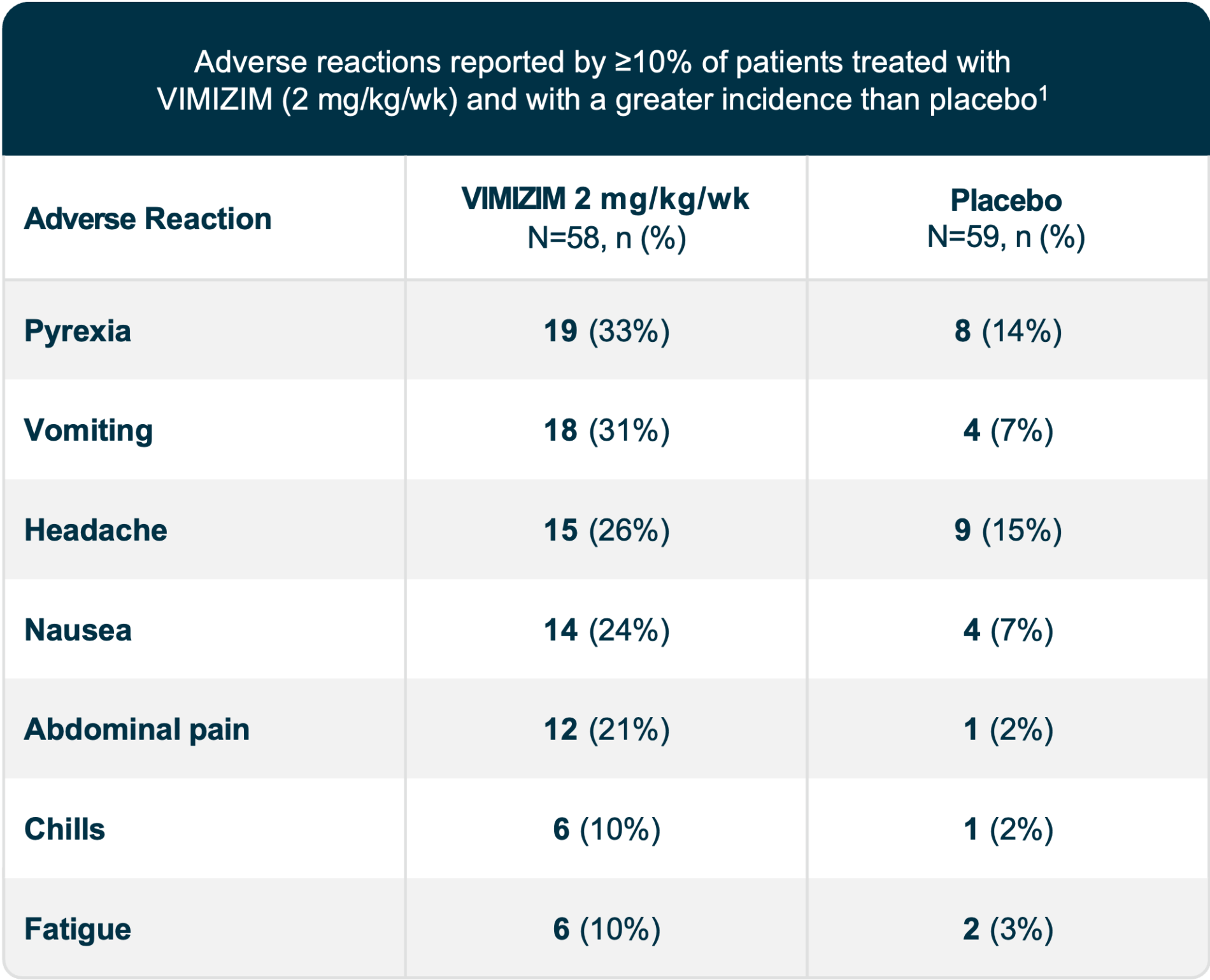
In clinical trials, the most common adverse reactions (≥10%) occurring during infusion included pyrexia, vomiting, headache, nausea, abdominal pain, chills, and fatigue. The acute reactions requiring intervention were managed by either temporarily interrupting or discontinuing infusion, and administering additional antihistamines, antipyretics, or corticosteroids.
All patients treated with VIMIZIM 2 mg/kg once per week in the placebo-controlled trial developed anti-drug antibodies. Because all patients developed anti-drug antibodies, associations between antibody titers and reductions in treatment effect or the occurrence of anaphylaxis or other hypersensitivity reactions could not be determined.
To report SUSPECTED ADVERSE REACTIONS, contact BioMarin Pharmaceutical Inc. at 1-866-906-6100, or FDA at 1-800-FDA-1088 or www.fda.gov/medwatch.
Please see full Prescribing Information, with Boxed Warning for risk of anaphylaxis or visit www.Vimizim.com.
VIMIZIM® (elosulfase alfa) is indicated for patients with mucopolysaccharidosis type IVA (MPS IVA; Morquio A syndrome).