
Cerliponase alfa ▼ is not registered in all countries, and where it is registered the content of its indication along with other content may vary.
Please refer to your local prescribing information before prescribing cerliponase alfa.
▼ This medicinal product is subject to additional monitoring, special reporting is required in relation to adverse reactions. Email us at medinfo@bmrn.com for further details.

These features can be early indicators of a group of rare, inherited neurodegenerative conditions known as neuronal ceroid lipofuscinoses (NCLs) — sometimes referred to collectively as Batten disease.1,2
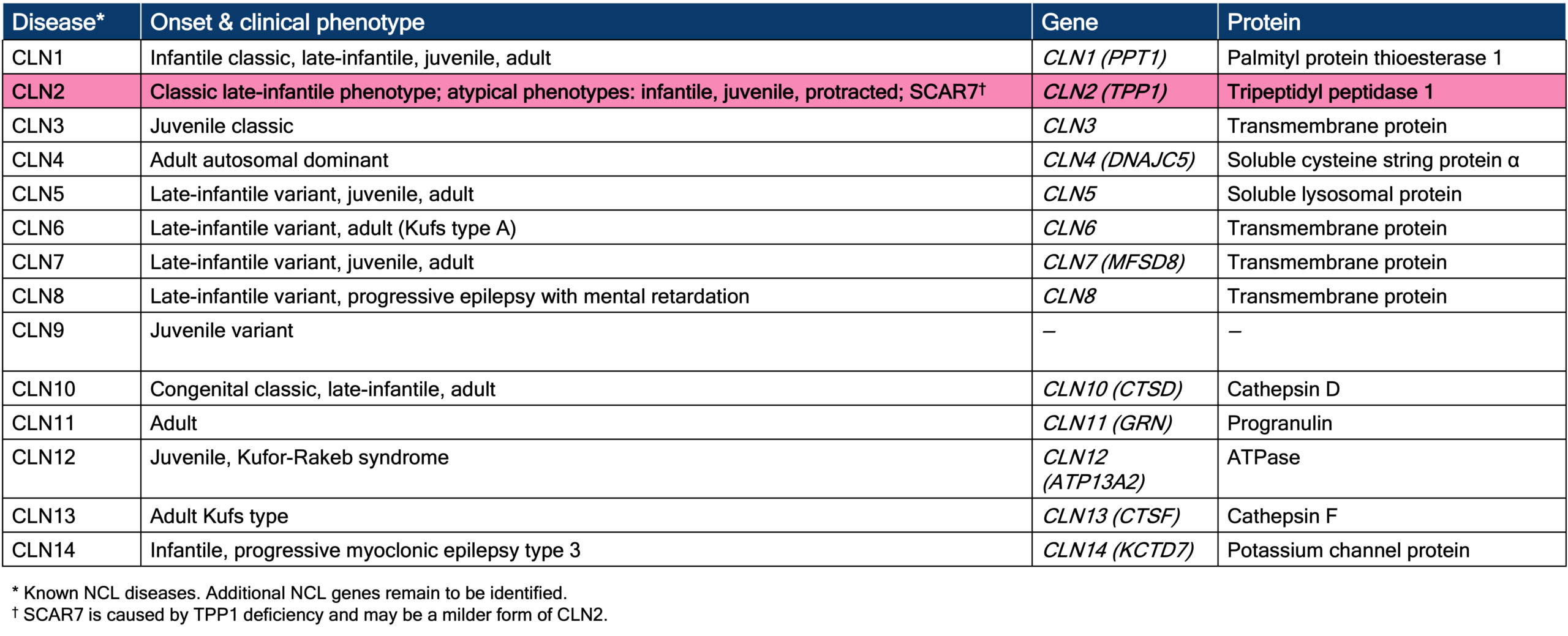
Adapted from Mole & Cotman, 2015.4
Ultrastructural appearances of different forms of NCL:
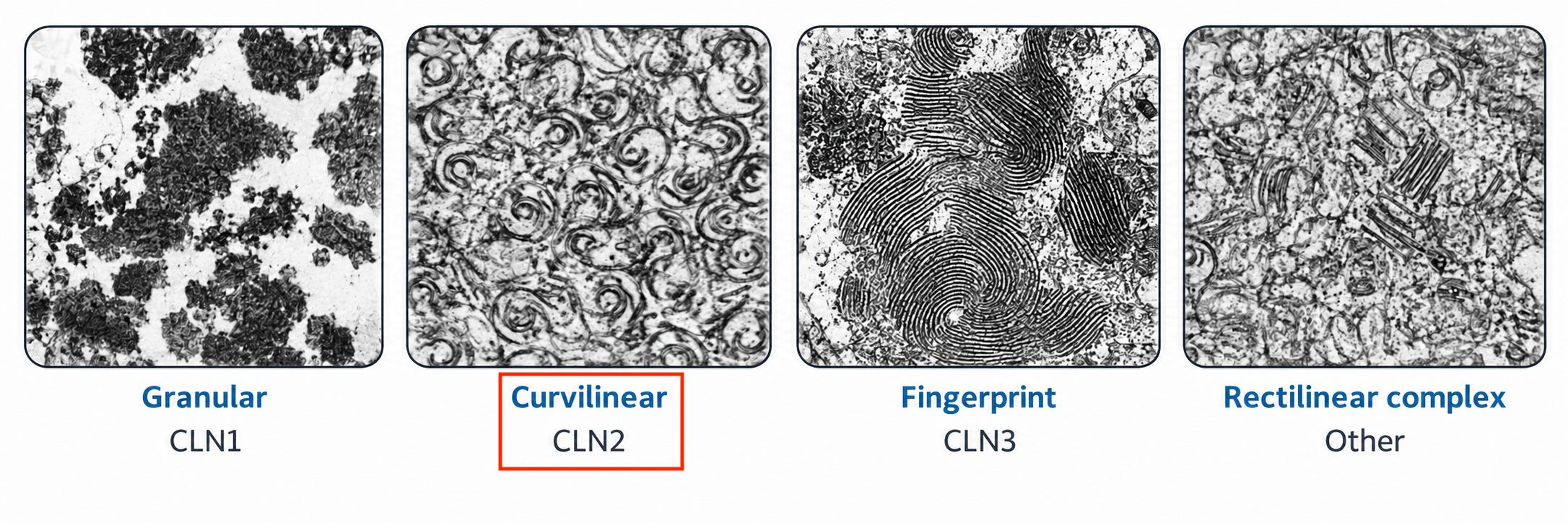
Source: Haltia, 2003.11
CLN2 disease (late-infantile NCL type 2), an NCL subtype, is an autosomal recessive disorder caused by pathogenic variants in the TPP1 gene which codes for the TPP1 enzyme.9
CLN2 disease is caused by mutations in the TPP1 gene, which result in deficient activity of the tripeptidyl peptidase 1 (TPP1) enzyme. TPP1 is a protease that cleaves N-terminal tripeptides from substrates in lysosomes.8–10
The absence or reduced activity of the TPP1 enzyme is associated with an accumulation of ceroid lipofuscin storage material in the lysosomes.10,14
Over time, cell dysfunction, cell death and atrophy occur.2,9
Lysosomal accumulation of ceroid lipofuscin in CLN2 disease is thought to begin in the prenatal period, yet children appear to develop normally until the onset of presenting symptoms.14
CLN2 disease presents on a spectrum with phenotypic heterogeneity. Classic CLN2, the most common form of CLN2 disease, typically presents between two and four years of age with language delay, motor decline, and seizures.3,6 Atypical CLN2 disease is less common, and often has delayed symptom onset and a protracted natural history compared with the classic form.14
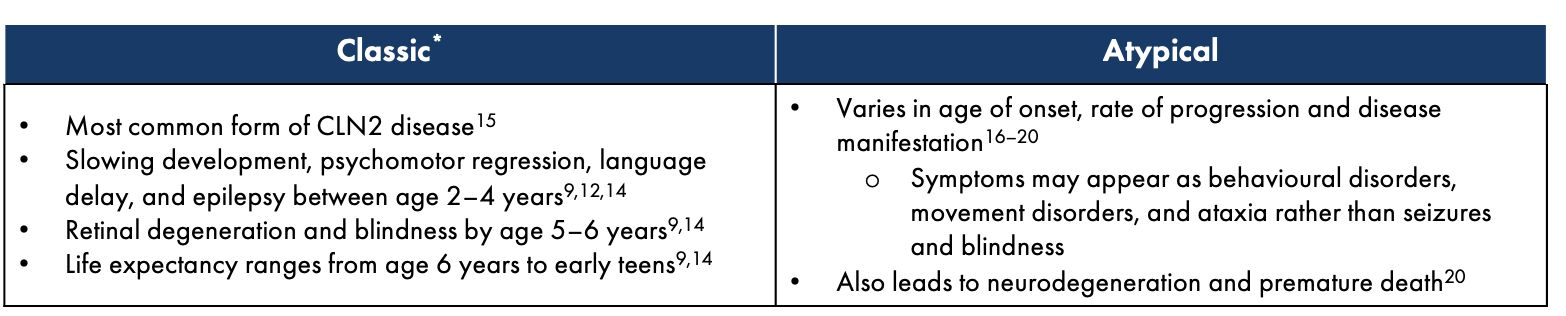
*Historically, Jansky-Bielschowsky disease.
Children with CLN2 disease can experience a range of symptoms and complications that require specific types of care. Guidelines recommend a multidisciplinary team approach to CLN2 disease management, in which various specialists work together to holistically address these symptoms and optimise care.13,15
CLN2 disease should be considered in a child with:
Up to 83% of children with CLN2 disease experience delay of early language development. In a minority of cases, other developmental delays or ataxia may be the first sign, though these can often occur along with the language delay.12,21
Due to the rapid rate of CLN2 progression, effective management of CLN2 disease depends on early recognition of the condition.15 Recognising CLN2 disease is a race against time.
For more information on early diagnosis of CLN2 disease, click here.
Classic CLN2 disease follows a rapidly progressive course. Early symptoms such as language delay, seizures and motor decline are followed by continued loss of motor and language abilities, developmental regression and progressive neurodegeneration.12,22
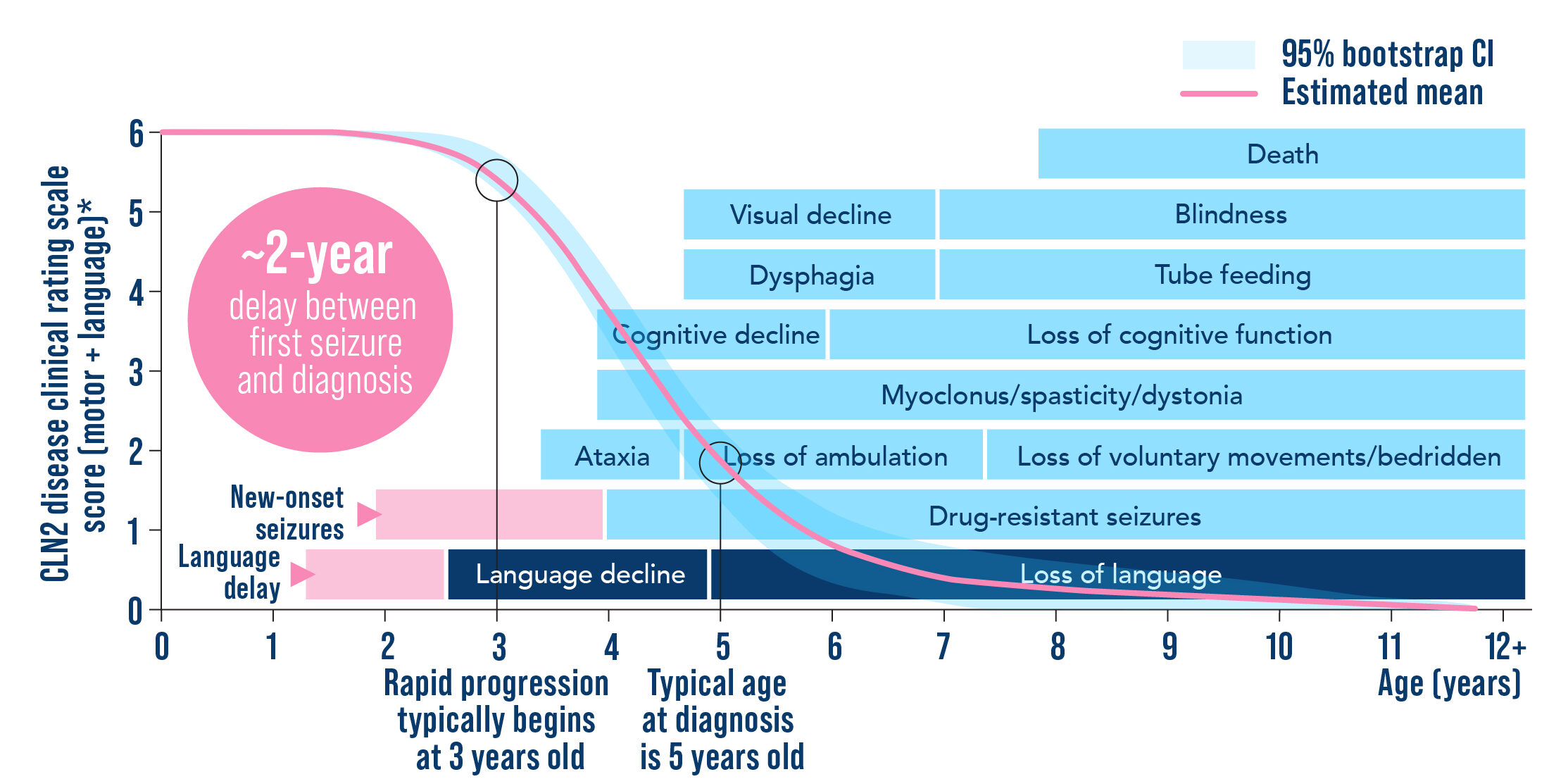
Adapted from Nickel et al, 201812 and Specchio et al, 2020.22
*Age ranges represent those typical of the classic late-infantile phenotype. Atypical phenotypes of CLN2 disease can vary in age of onset, rate of progression and disease manifestation.22
The CLN2 disease clinical rating scale is an efficient way to assess disease progression in two major functional areas: motor and language ability.23
CLN2 disease progression can be assessed using the CLN2 clinical rating scale, a modified version of the Hamburg Scale. This scale comprises four domains, which can be evaluated to give a total score (between 0 and 12). 24–26
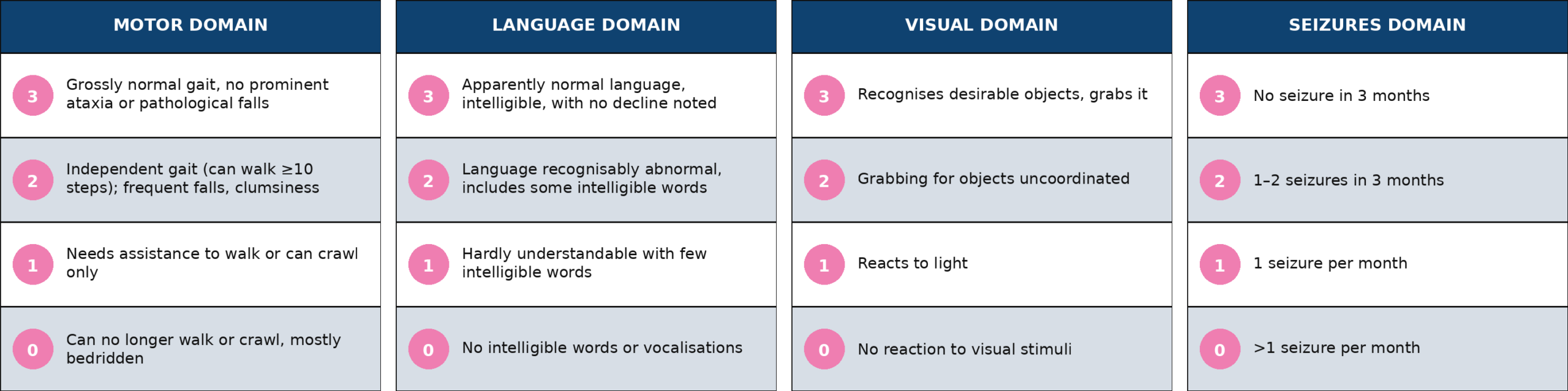
Adapted from Specchio et al, 2024.24
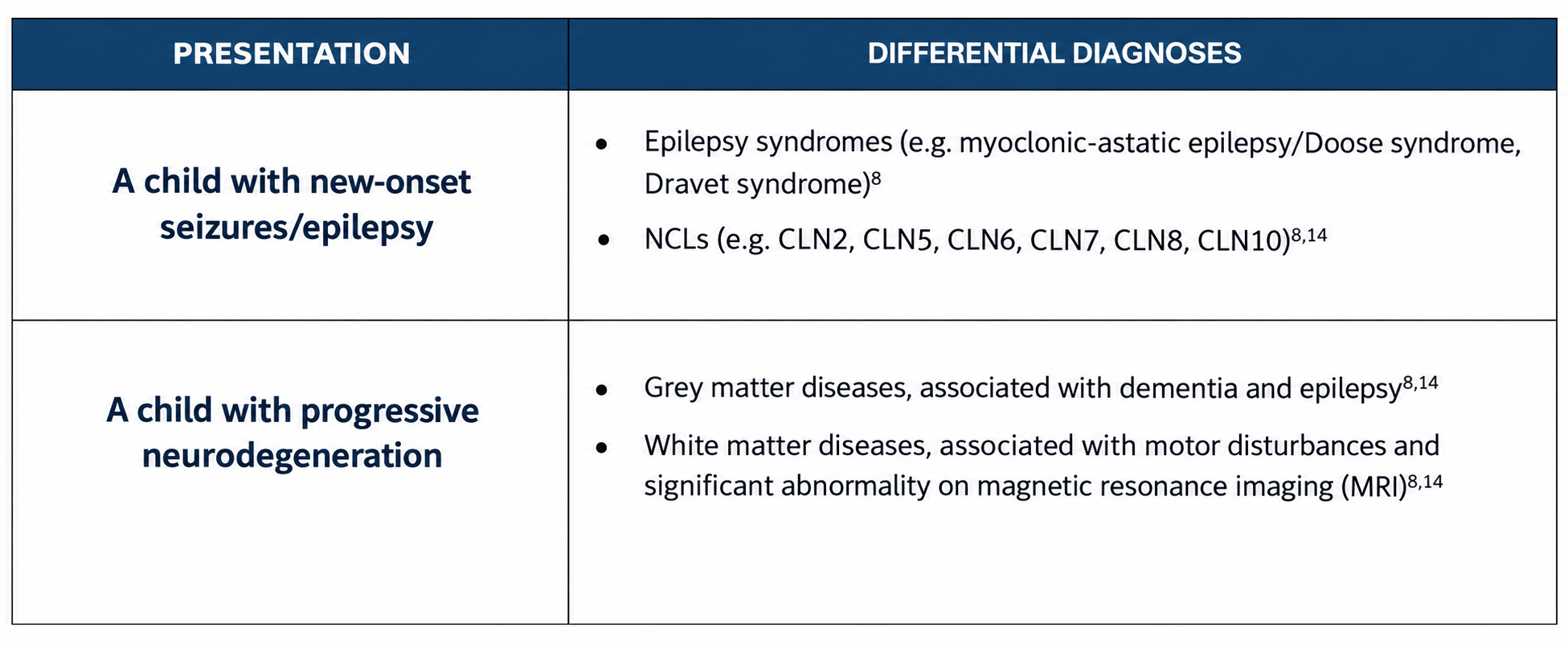
CLN2 disease can be challenging to recognise.8 Early symptoms can overlap with several other epileptic encephalopathies and other progressive paediatric neurological disorders.14
CLN2 disease is often initially misdiagnosed, delaying accurate diagnosis. Delayed diagnosis means substantial disease progression can occur before treatment is initiated.12,22 Recognising when CLN2 disease should be considered is essential to support accurate diagnosis.
Early in the disease course:14
Later in the progression of CLN2 disease:14
A combination of genetic and enzyme testing is used to confirm a diagnosis of CLN2 disease.
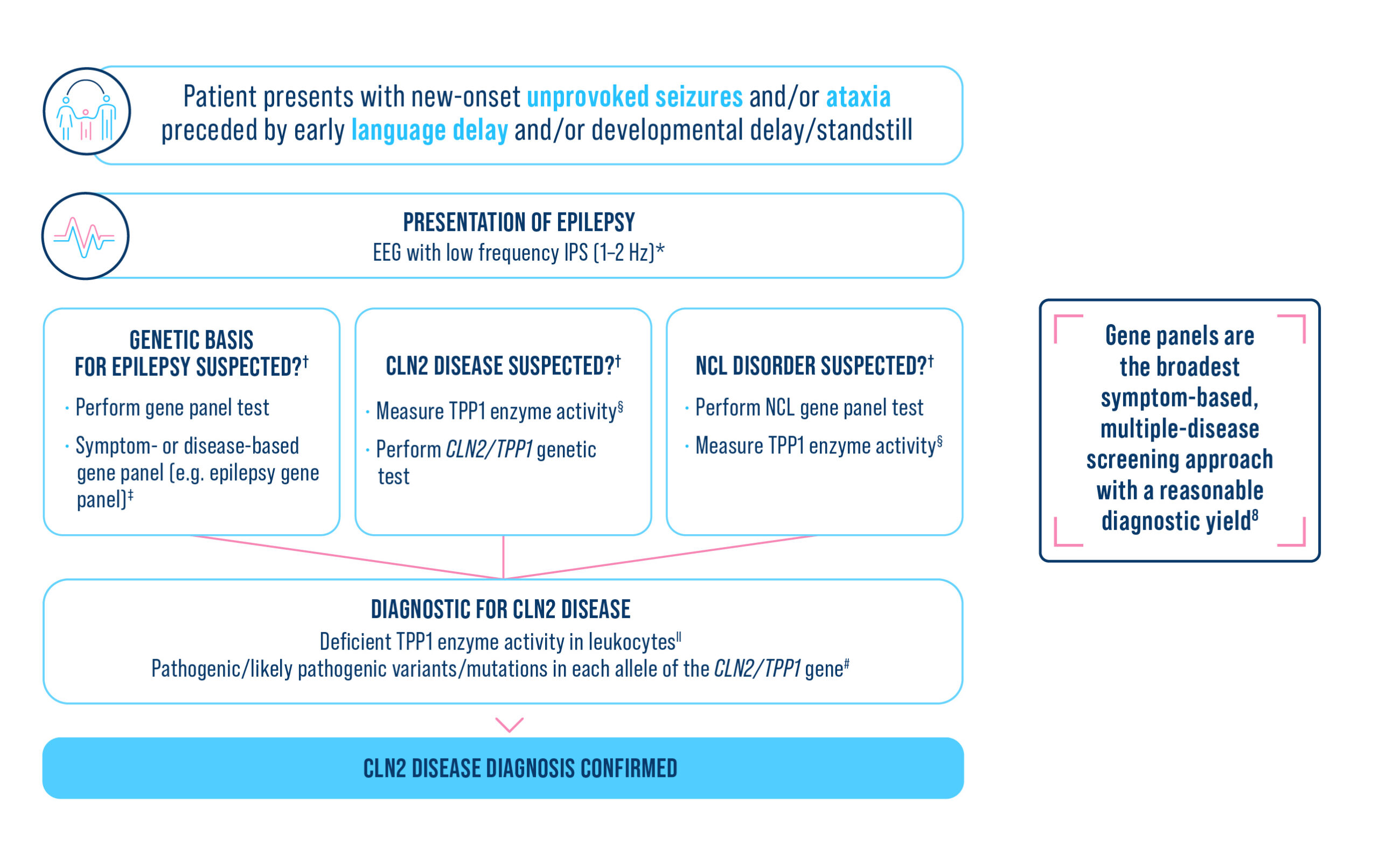
Adapted from Fietz et al, 2016.8
*Absence of EEG findings should not preclude follow-on testing for epilepsy syndromes, CLN2 disease or other NCLs.8
†Additional clinical assessments may be warranted, such as brain MRI, OCT/VEP/ERG/FA, EM biopsy.8
‡TPP1 is included in many gene panels; ensure the one you select tests for it.
§TPP1 enzyme activity may be measured in sample types such as dried blood spots or saliva. PPT1 enzyme activity (CLN1 disease) is useful to assess with TPP1.8
‖TPP1 enzyme activity testing in other sample types can also be diagnostic.8
#Includes single gene sequencing, gene panels, or whole exome sequencing.8
This website provides educational information for healthcare professionals who may be assessing children with unexplained developmental regression or seizure onset.
Looking for more information? Explore the Resources page to access a range of educational materials, clinical resources, expert-led webinars, case studies, and on-demand content relating to CLN2 disease.
CI, confidence interval; CLN1, neuronal ceroid lipofuscinosis type 1; CLN2, neuronal ceroid lipofuscinosis type 2; EEG, electroencephalogram; EM, electron microscopy; ERG, electroretinography; FA, fluorescein angiography; IPS, intermittent photic stimulation; MRI, magnetic resonance imaging; NCL, neuronal ceroid lipofuscinosis; OCT, optical coherence tomography; PPT1, palmitoyl-protein thioesterase 1; SCAR7, spinocerebellar ataxia, autosomal recessive 7; TPP1, tripeptidyl peptidase 1; VEP, visually evoked potential.
COM-ET-3024 | September 2026