


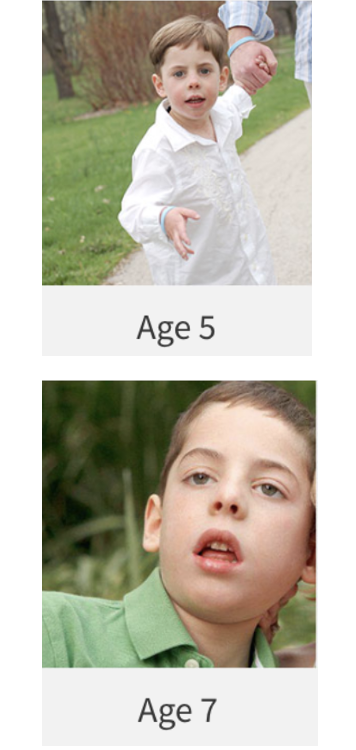
Age ranges depicted are averages for the classic late-infantile phenotype. Atypical phenotypes of CLN2 disease can vary in age of onset, rate of progression, and disease manifestation.



Blindness is an early symptom in other NCLs, but occurs in the later stage of CLN2 disease.6,9

The standardized scoring system can be used to quantitatively assess disease progression at diagnosis and track loss of function over time6

In addition to motor and language function assessments, there are also functional domains (each with a 3-point scale) to assess vision and the frequency of seizures.6
*In some children, normal motor and/or language development was never present. In such cases, the best performance achieved by the child was considered normal. When that performance level became recognizably worse, the child was rated a 2 for slightly abnormal motor function and/or language development.
The majority of children with CLN2 disease experience a consistent loss of motor and language function, as measured by the CLN2 Disease Clinical Rating Scale7

Longitudinal data from 41 subjects with CLN2 disease in DEM-CHILD registry. CI, confidence interval.